Affordable Interior Design Near Aurora, GTA & Toronto – Lynteriors
Sometimes, hiring an affordable interior designer in Aurora—like Lynteriors, who also serves the Greater Toronto Area (GTA) and Toronto— can actually help you save money in the long run. With professional expertise, you can avoid costly mistakes and gain access to exclusive trade discounts that make your renovation or redecoration far more cost-effective.
Ready to create a home that’s both beautiful and functional—without breaking the bank? Schedule your free discovery call today and see how homeowners across Aurora, the GTA, and Toronto are saving thousands—without sacrificing style!
Below is an example, of one way to redecorate in a budget friendly way.
Redecorating on a Budget Tip– Transform Your Space by Simply Changing the Layout
Looking to refresh your home without overspending? One of the easiest—and most budget-friendly—ways to redecorate a room is by rethinking its layout. Sometimes, a simple rearrangement of furniture can make your space feel more functional, and completely new, without buying a single extra piece.
Simply Change Your Layout for a Fresh Look
Often, the issue isn’t your furniture—it’s the layout. By moving your existing pieces and adding a few key accents, you can dramatically improve how your room feels and functions.
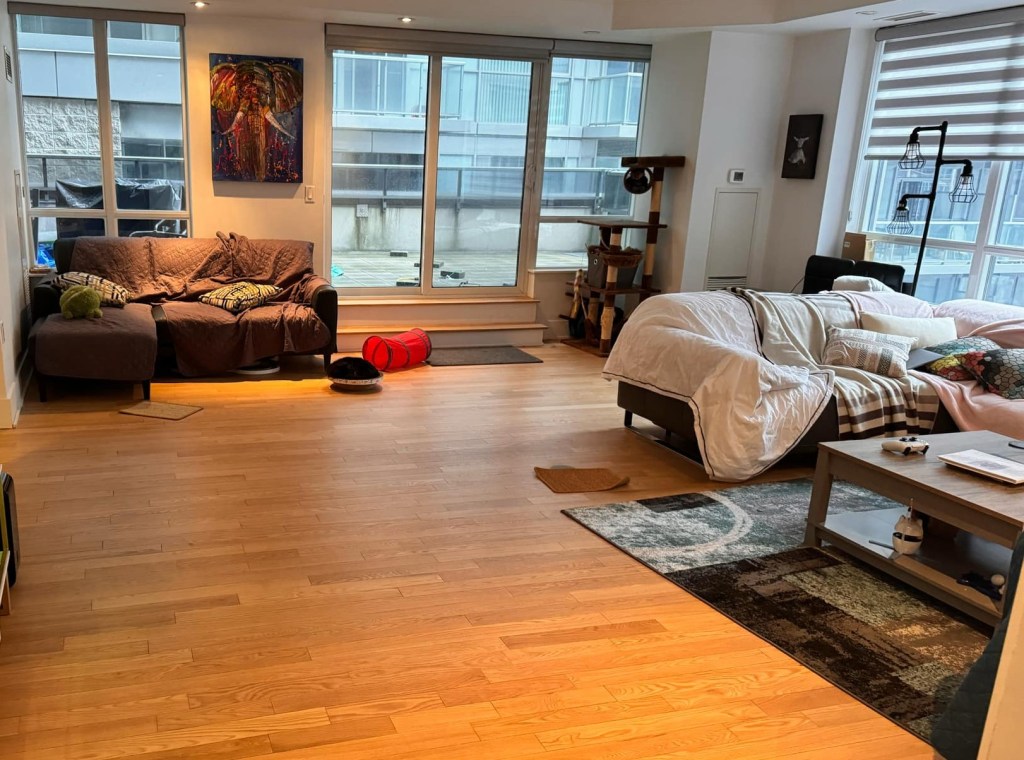
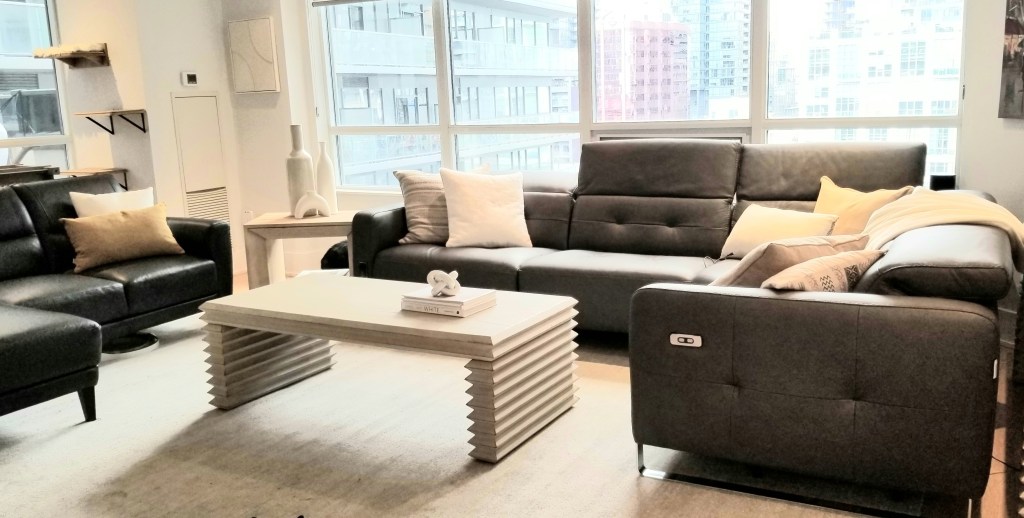
For example, I recently worked with a couple in a downtown Toronto condo who felt their space just wasn’t working. Their small black sectional had been tucked away in a reading nook, but it felt awkward there and wasn’t getting much use. I suggested moving it into the living room area instead—and that one simple change instantly made the space feel more comfortable and functional for TV nights and entertaining friends.
After with 2 sectionals in living area
A Few Small Changes Made a Big Impact
From there, all they needed was a lighter coffee table, rug, and side table to brighten the room and add convenience. Instead of throwing out the minimalist style sectionals and buying all new seating furniture, we simply re-imagined what they already had—saving them money while still achieving a fresh, inviting look.
How Hiring an Interior Design Consultant Saves You Money
1. Avoid Costly Trial-and-Error Mistakes
Why Experience Matters
An experienced designer helps you get it right the first time—whether it’s choosing the perfect furniture size, selecting cohesive colours, or planning a functional layout, just like I did for this condo. With over 8 years of experience, I create designs that are not only beautiful but also practical, personalized, and perfectly suited to the way you live.
No more buying a sofa that doesn’t fit.
No more repainting because the colour feels “off.”
No more wasted purchases
2. Access Exclusive Trade Discounts
Many designers have access to exclusive furniture, décor, finishes and materials discounts not available to the public. At Lynteriors, we share a substantial portion of these savings with you—helping homeowners in Aurora, Toronto, and the GTA save hundreds, even thousands of dollars.
3. Lower Overhead, More Savings – with a Focus on Homes Only
Because we work from a home-based studio in Aurora, we keep overhead costs low—so more of your budget goes directly into your home design, not unnecessary markups. Plus, we focus exclusively on residential design, ensuring our expertise is tailored to creating stylish, livable homes.
Stay on Budget—Without Sacrificing Style
Stay on Budget—Without Sacrificing Style
At Lynteriors, we design with your budget in mind from day one. That means we help you:
Plan your project efficiently
Access exclusive, high-quality materials and furnishings at designer trade pricing—so you can enjoy elevated style while stretching your budget further
Maximize your return on investment
Ready to Save Thousands on Your Next Project?
Whether you’re in Aurora, the Greater Toronto Area, or Toronto, Lynteriors can help transform your home into a stylish, functional space—while keeping costs in check.
📞 Schedule your free discovery call today and see how much you could save on your next renovation or redecoration project!
My name is Lynn Asbury, an expert interior design consultant, home stager and owner of Lynteriors. I have over 8 years experience renovating, redecorating and stage homes that make homeowners and home buyers say “Wow” every time they walk into each room.
3 Interior Design Tips to Make a Kitchen Look or Feel Larger
Want to make your small kitchen feel bigger—without tearing down walls or spending a fortune (especially in today’s economy)? You can absolutely do it with smart design choices in cabinetry, colour schemes, and countertops. With the right design strategies, your tight kitchen can look and feel larger as well as open, airy, and inviting.
Here are 3 design tricks to make your kitchen appear larger:
1. White is Your Best Friend in a Small Kitchen
White isn’t just timeless—it’s also one of the most effective colours for making a kitchen feel bigger than it actually is.
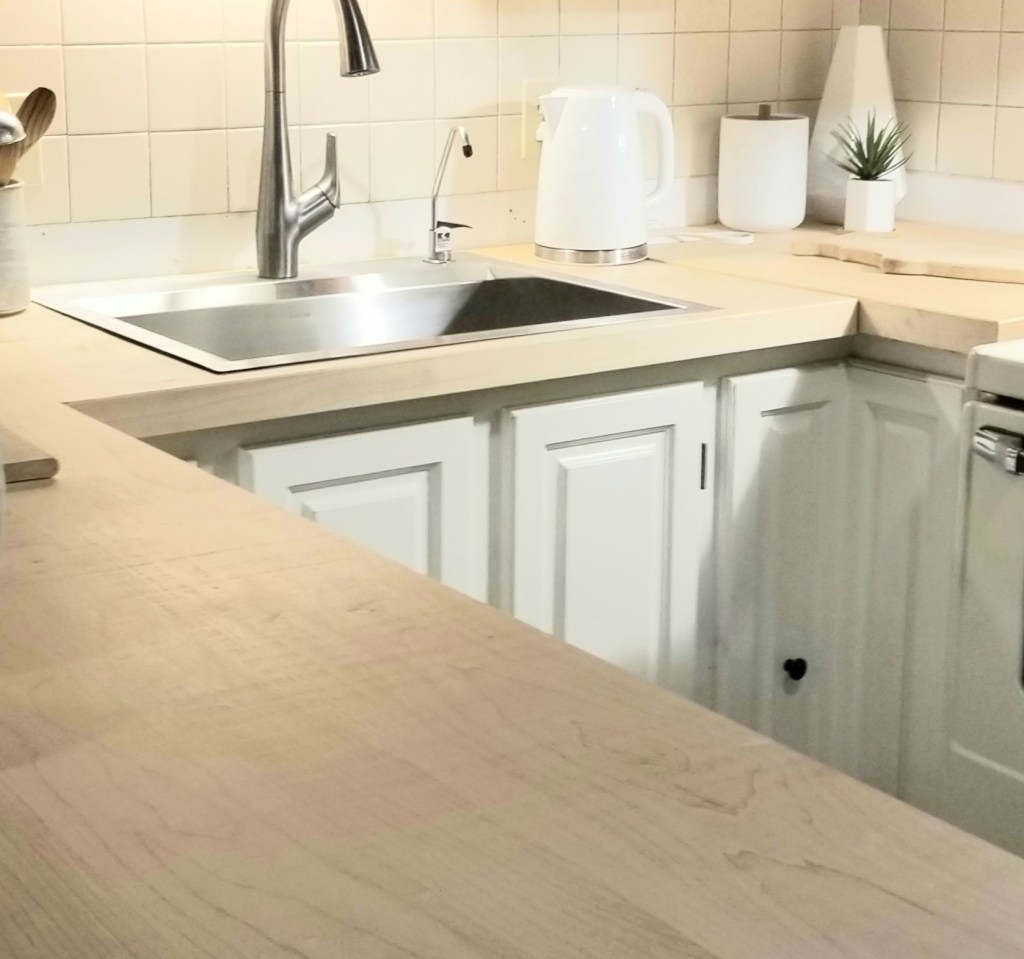
When renovating, paint your walls white and bring white tones into your cabinets, backsplash, ceiling, and even your countertops. When a space is kept within the same colour family, it creates the illusion of a seamless, limitless larger area like in the kitchen in the photo above.
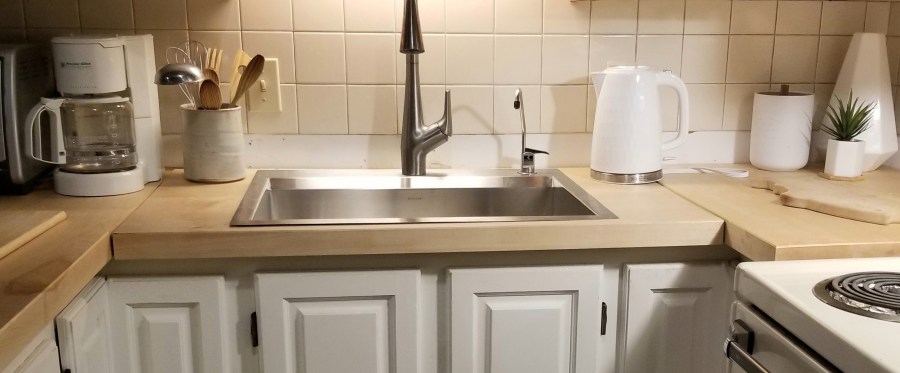
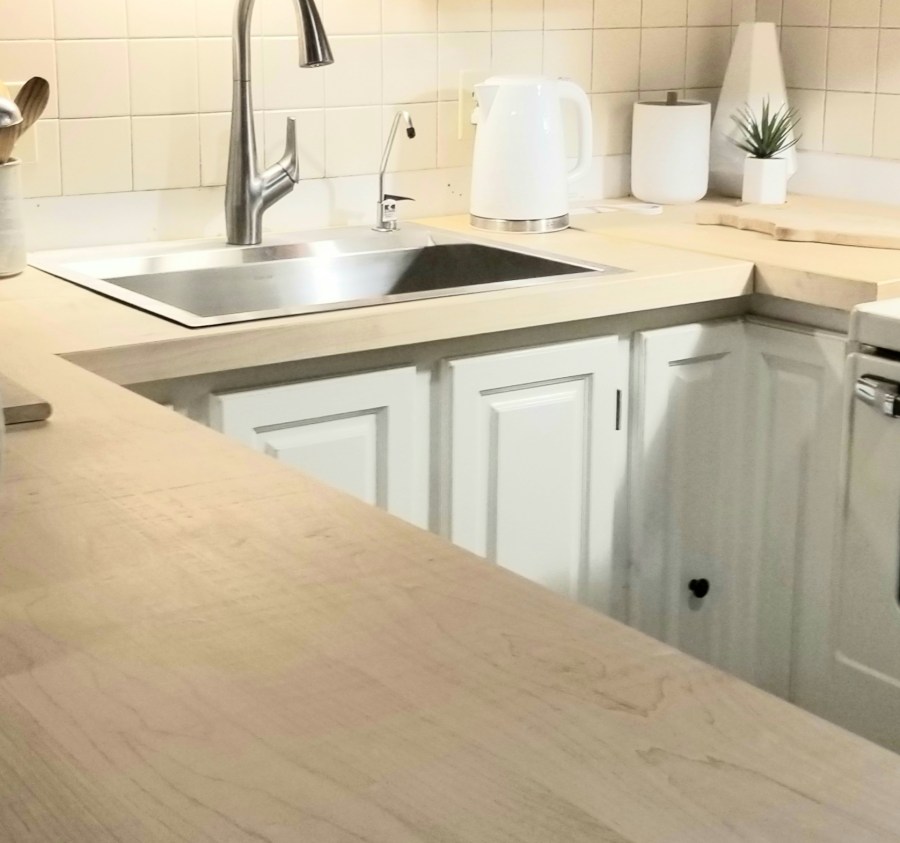
White is also a reflective neutral, which helps bounce light around the room and makes the walls visually recede. To enhance this effect, choose polished or glossy finishes that reflect light even more. In the kitchen shown below, the backsplash and blonde-toned maple countertop both have subtle reflective qualities. Combined with white cabinets, walls, and backsplash—all in similar tones—this creates a unified, airy feel.
Here, the cabinets, wall paint, ceiling, and backsplash share a close colour value—a warm white—so your eye moves effortlessly through the space without being interrupted by harsh contrasts. The result? A small kitchen that feels serene, cohesive, and expansive.
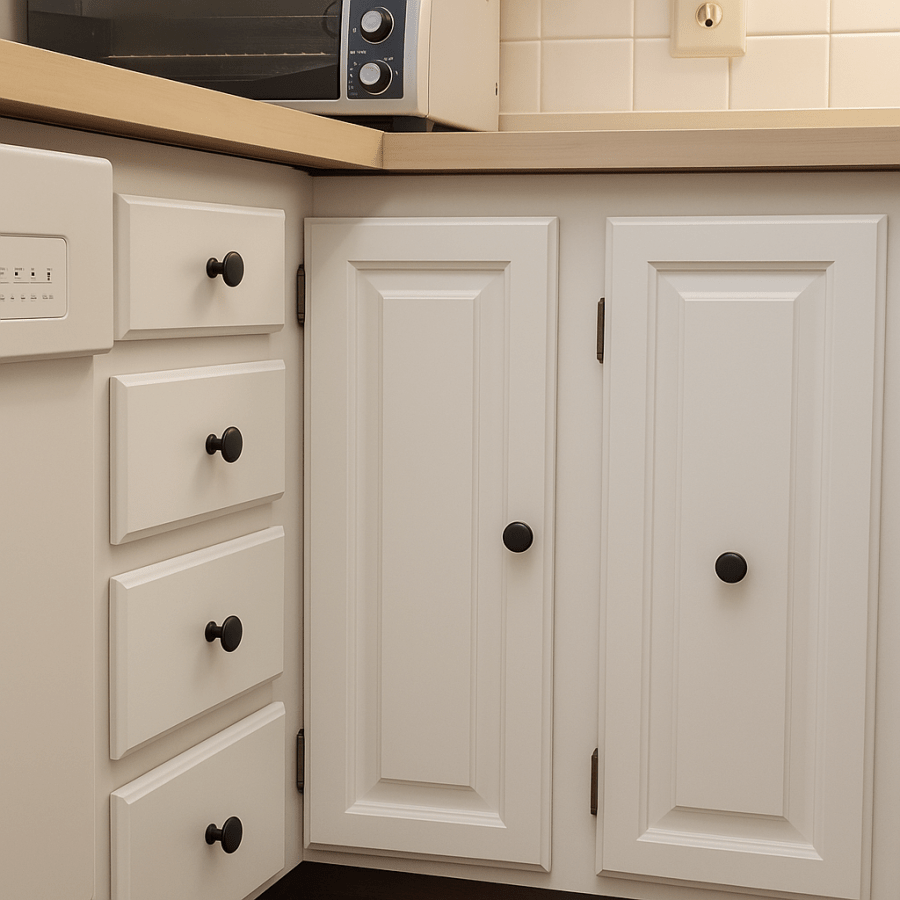
Finally, for depth and interest, use several shades of white and mix in contrasting textures. Recessed-panel cabinets, like the ones featured below, create gentle shadows that add dimension without breaking the flow of light tones.
2. Declutter, Declutter, Declutter
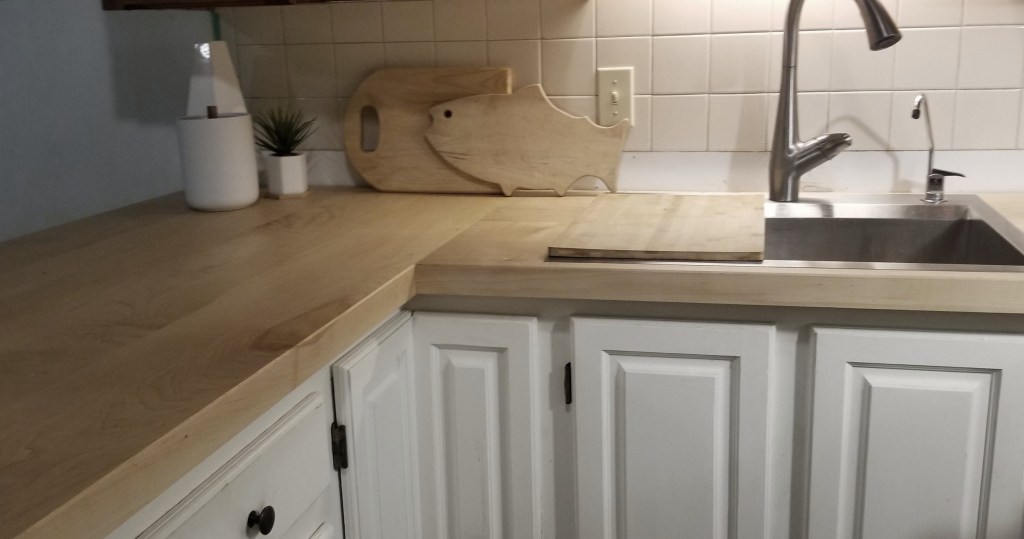
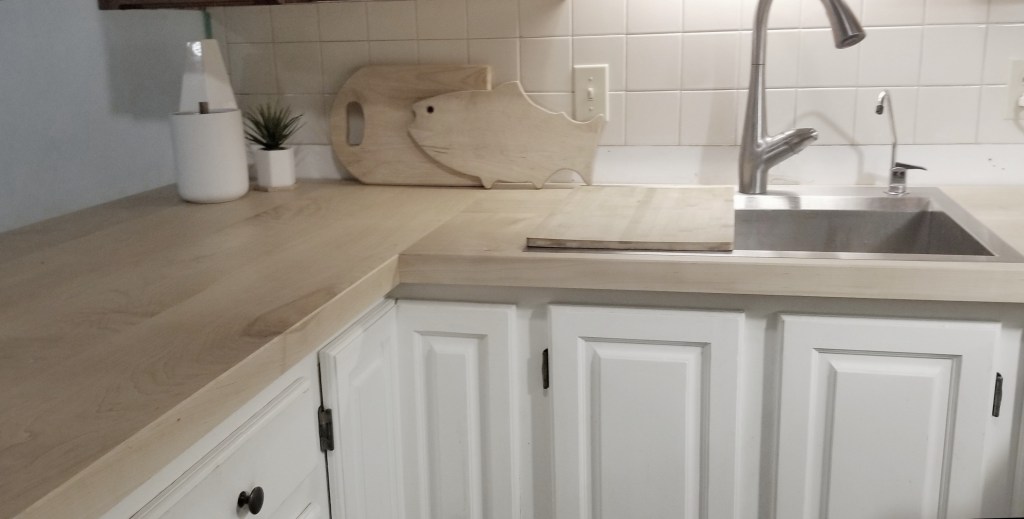
One of the quickest—and most budget-friendly—ways to make your small kitchen feel larger is to clear away the clutter. Below are before and after photos. The before photo colours of the cabinets, wall and countertop makes the kitchen look smaller and all the items on the countertop even more so. The lighter coloured countertop , cabinets and wall plus less counter clutter makes this area of the kitchen appear larger, lighter, more airy and updated.
Keep countertops as open as possible by storing small appliances in cupboards or your pantry. Avoid letting everyday items like mail, keys, and chargers pile up on your counters. Even removing overly decorative pieces, such as ornate handles or busy accessories, can help reduce visual noise.
Crowded countertops not only overwhelm the eye but also rob you of valuable workspace. To create a more spacious look, clear off counters. Then, stash as much as you can neatly behind closed doors.
The result? Your kitchen will instantly feel lighter, more open, larger and more functional—without a single wall being moved.
3. Consider Your Sink
When space is tight, every inch of counter space matters—especially around your sink.
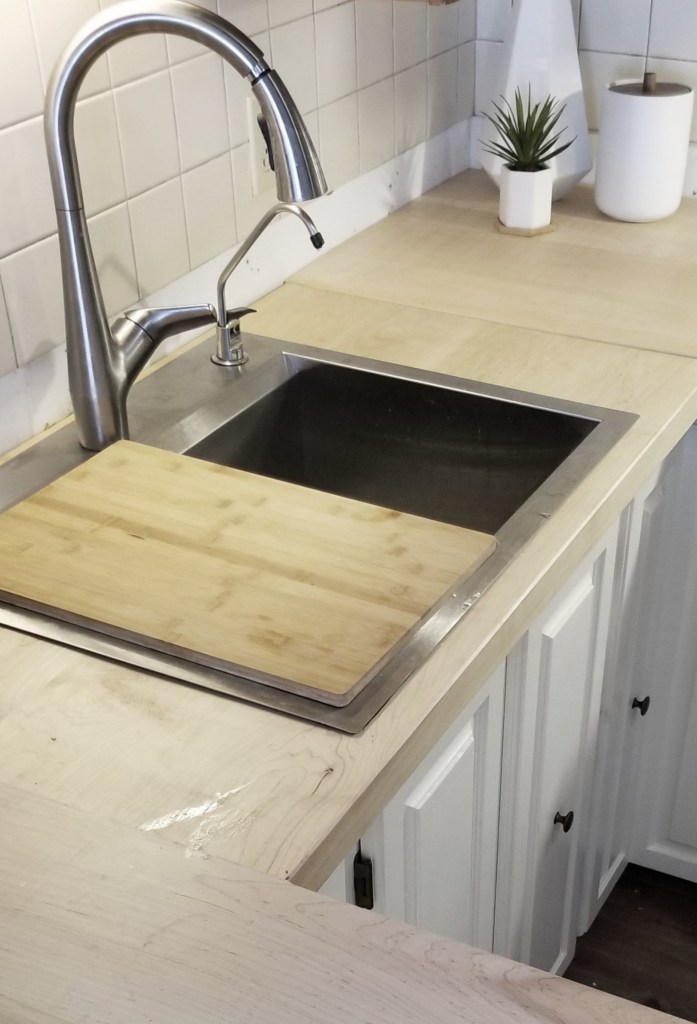
A workstation sink with a fitted cutting board (like the one pictured below) is a clever way to instantly extend your prep area without adding more countertops. When you’re finished, simply remove the cutting board to free up sink space again. It’s flexibility and function in the same footprint.
For very compact kitchens, a single-bowl inset sink can also be a smart choice. While it’s smaller, it frees up valuable counter space for everything from chopping vegetables to plating dishes.
In short, you can never have too much workspace—but with a little creativity, you can create the space you need without a major renovation.
A kitchen of any size can feel larger, open and airy if you know the right design tricks. Sticking to white cabinets and walls is a great start to achieving that spacious vibe. With the tips above, you can transform even the smallest kitchen into a space that feels larger, inviting, functional, and visually stunning.
At Lynteriors, we help homeowners in Aurora, Newmarket, Richmond Hill, and surrounding areas create kitchens they truly love. If you’re just starting to plan your kitchen project Lynteriors can guide you every step of the way.
✨ Contact us for your free discovery call today at 416 721 6217and take the first step toward your dream kitchen. Got questions? Drop them in the comments—we’d love to hear from you!
My name is Lynn Asbury, an expert interior design consultant, home stager and owner of Lynteriors. I have over 8 years experience renovating, redecorating and stage homes that make homeowners and home buyers say “Wow” every time they walk into each room.
The principles of interior design are the foundational guidelines that designers use to create your spaces that are both beautiful and functional. These principles ensure your home not only looks cohesive, but also feels comfortable and serves its intended purpose.
Design, at its core, is the intentional arrangement of one or more of these principles—organized to achieve a specific goal or effect.
The seven core principles are:
balance
emphasis
contrast
scale
proportion
rhythm
unity and variety
When unity and variety work together, they create harmony—the ultimate goal of any well-designed space.
These principles are the backbone of great design. They help ensure that your space is designed beautifully, while still reflecting your unique style and meeting the practical needs of your everyday life. In this post, we’ll focus on the design principle known as rhythm—and explore how you can apply this principle to help create your dream home.
How Rhythm Transforms a Room: A Secret Revealed
Want to create a beautiful, harmonious space in your home?
One of the best-kept design secrets to achieve this is to use the design principle known as rhythm.
Rhythm in interior design is all about repeating key elements—such as colours, lines, shapes, or patterns—throughout a space. This repetition creates a sense of movement and flow, guiding the eye naturally from one area to the next. The result is a room that feels cohesive, balanced, and visually inviting.
Whether it’s a consistent colour echoed in throw pillows, or a repeated shape found in accessories or furniture details, rhythm acts as the connective thread. It ties the room together and brings a sense of cohesion to the entire design story.
Toronto condo living room redecorating project
Colour Rhythm
Rhythm is a key design principle that suggests motion and guides the eye seamlessly from one area or object to another. It helps create visual interest and a sense of harmony. When design elements are arranged into an organized pattern—whether through color, shape, or texture—they establish rhythm. For example, an interior designer could create rhythm by using a colour.
I’ve developed a lot of hands-on experience using rhythm to unify spaces. It’s a technique I apply often, whether I’m staging homes for sale or styling a renovated or redecorated space for clients.
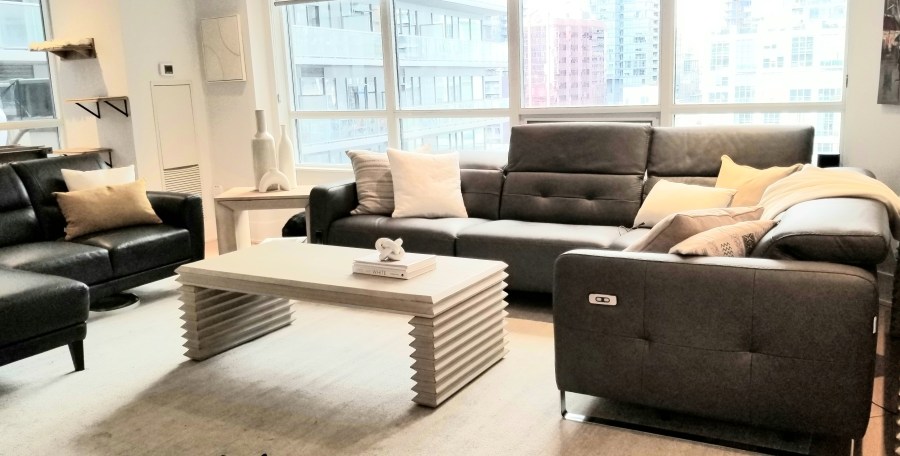
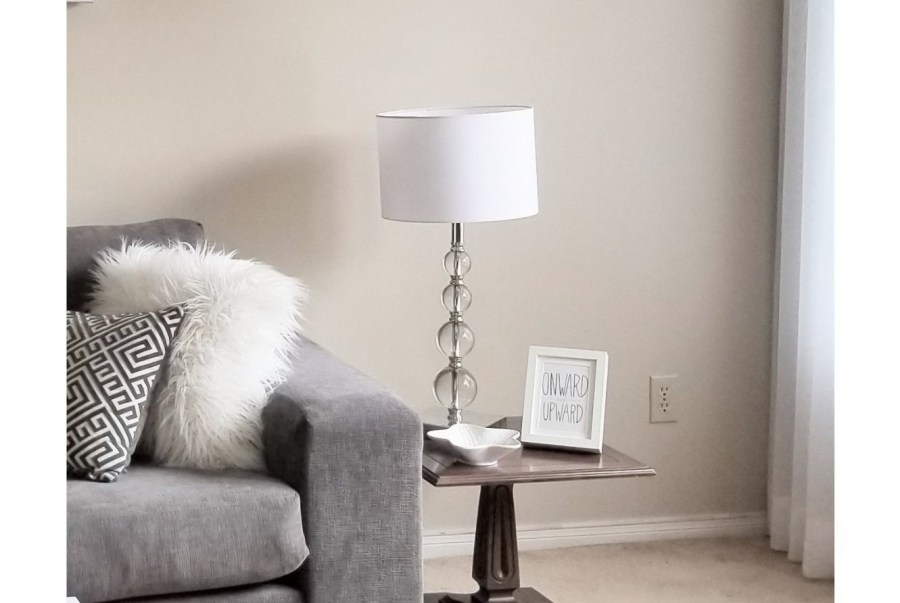
Take, for example, the condo pictured above. The owners wanted to lighten and brighten their living room but also hoped to keep their existing dark charcoal sectionals. In an east-facing room with limited natural light, the heavy furniture made the space feel even darker.
To address this, I introduced as much white as possible to reflect light and create a brighter, more inviting atmosphere—just as the homeowners asked. I applied the design principle of rhythm to establish a visual flow by repeating white elements throughout the room.
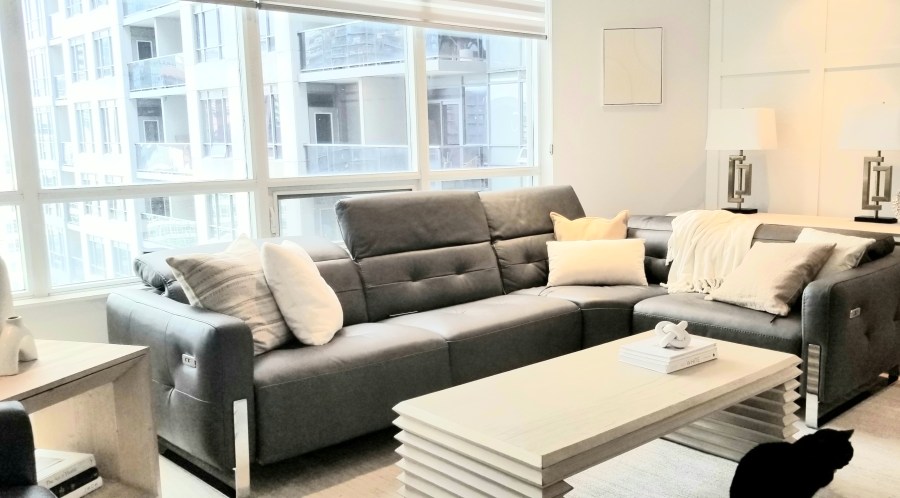
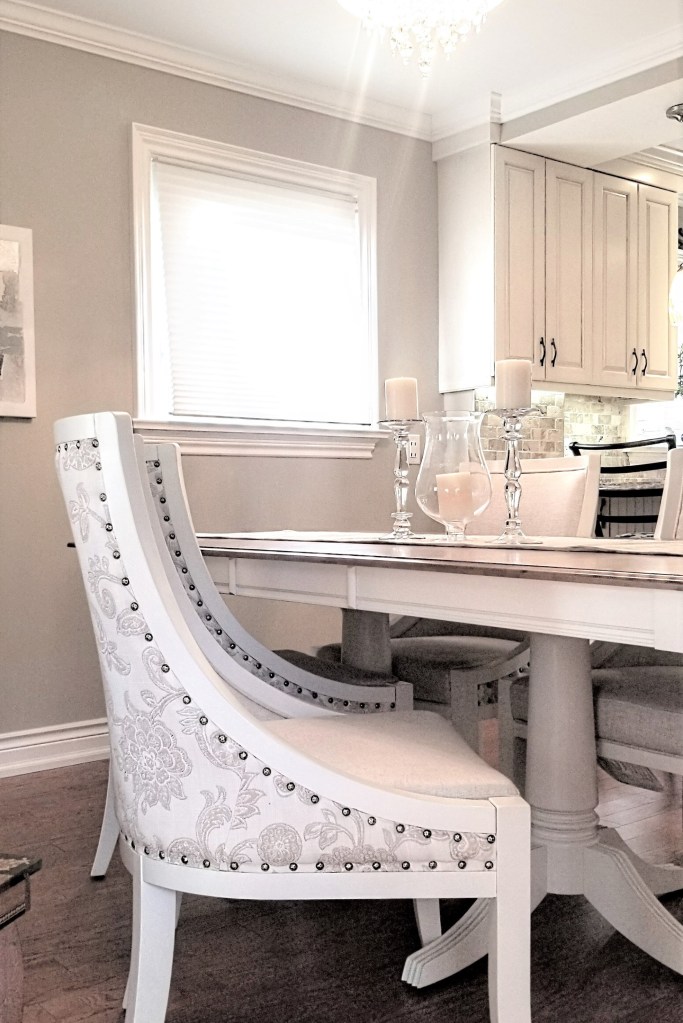
Your eye moves from the white walls to the white wall art and lamp shades, then to the whitewashed console. The white is picked up again in the pillows and throw on the sectional, echoed in the whitewashed coffee table, and seen again in the decorative accents and area rug. This subtle repetition of white elements creates a colour rhythm that ties the entire space together.
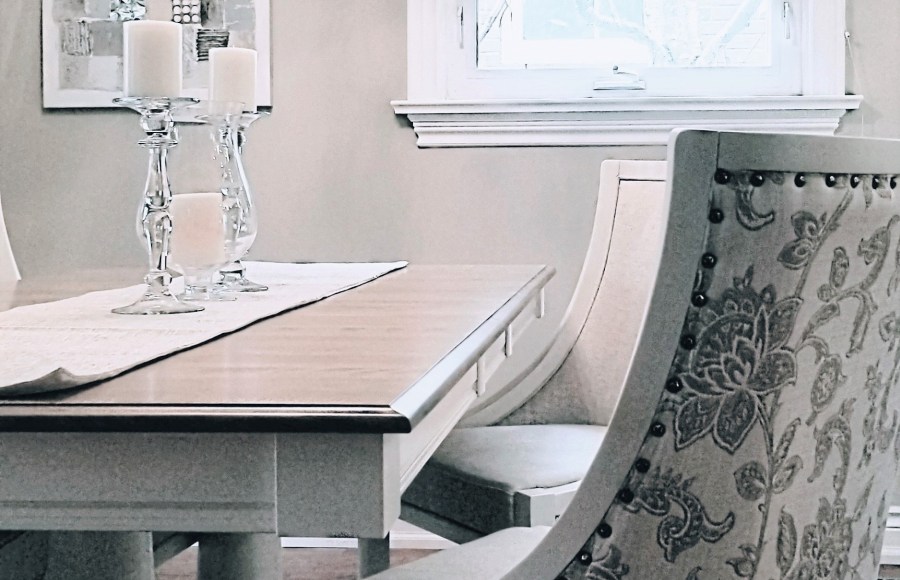
Refer to the photo above to see how this rhythm creates rhythm, brightness, and harmony in the room. The dining room below also using a white colour rhythm to unite the space and make it appear larger.
Redecorated Dining Room
Summary
In the living room featured in this post, all the new white furniture and decor helped lighten and brighten the space, just as the homeowners wanted. The design principle of rhythm played a key role in achieving this effect. Rhythm in interior design is crucial for creating visually pleasing and cohesive environments that feel both dynamic and balanced.Crafting harmonious and inviting spaces is a key goal in interior design, and understanding the concept of rhythm is essential to achieving this. I also incorporated other principles such as emphasis and balance, but explaining those here would make for a much longer post. An expert interior design professional keep these principles in their mind when working on your project and that is exactly what I do!
As you can see, using even one design principle effectively takes thought, expertise and intention—let alone combining several in one space. So, if you find decorating overwhelming, you’re not alone—and I’d love to help.
If you’re ready to create your own personal sanctuary, I’m here to guide you through the process. Let me help you create your personal sanctuary. After all, you deserve a home that reflects your style. Contact us by clicking the button below.
My name is Lynn Asbury, an expert interior design consultant, homestager and owner of Lynteriors. I have over 8 years experience renovating, redecorating and stage homes that make homeowners and home buyers say “Wow” every time they walk into each room.
If you’ve ever been confused about the difference between an interior decorator and an interior designer, you’re definitely not alone.
In fact, even within the industry, the terms are sometimes used interchangeably, leading to plenty of confusion. Over the years, I’ve spoken with homeowners, clients, and business owners etc. who weren’t quite sure where the line is drawn. So, I decided to dig in and do some research and get clear on the distinctions myself.
This post is here to share what I’ve learned—so the next time someone asks (whether it’s a client or a curious friend), we’ll all have a clear answer.
You might also be wondering whether both interior decorators and interior designers take on your renovation projects. It’s a great question—especially now, when renovating your kitchen or another part of your home is often a smarter, more practical choice than moving.
With rising tariffs, ongoing economic uncertainty, and the high cost of buying a new home, many homeowners are choosing to stay put. Purchasing a new property often involves reworking your mortgage and taking on added financial stress. That’s why more and more people are choosing to invest in upgrading and personalizing the space they already have.
So, if you are considering renovating your kitchen or bath you may be asking, do decorators and designers both handle renovations? The short answer is—yes, it could be either. Read on to find out what I mean.
Difference Between Decorator Designer?
Newmarket Dining Room by Lynteriors
Education
While there is often some overlap in skills, interior decorators and interior designers differ significantly in their training and the types of projects they are qualified to take on.
I became familiar with interior decorating programs in Ontario after graduating from Seneca’s Interior Decorating program. However, I realized I knew less about what kind of education interior designers receive. As I considered going back to school to study interior design, I took a deep dive into some of the local design programs.
What I discovered was eye-opening. Interior designers are trained to design interiors for new builds, commercial spaces such as offices, restaurants, and hotels, as well as residential renovations. Their education includes extensive study of building codes, fire and safety regulations, and technical requirements to ensure compliance with local and national standards. This specialized training qualifies them to work on projects like new home construction and renovating commercial interiors—areas where interior decorators are not typically involved.
However, when it comes to homes that are already built, these technical services that involve building codes are often not required. In those cases, a decorator’s expertise in residential design, space planning, and aesthetic enhancements may be exactly what’s needed.
That said, interior designers are also trained to furnish and renovate residential spaces—just like interior decorators. This is where their roles overlap, and it’s particularly relevant for homeowners like yourself to be aware of.
Window Treatment Design and Redecorating by Lynteriors
Should I Hire an Interior Designer or Decorator
If you’re looking to refresh or renovate your existing home, both decorators and designers are capable of helping. However, hiring an interior designer may not always be the most practical choice, especially since their time is often divided between commercial projects, new builds, and residential work- so they may not always develop the same depth of expertise in residential design.
Interior decorators, on the other hand, specialize exclusively in homes that are already built—just like yours. Their focus is solely on residential spaces, which makes them experts in creating beautiful, functional homes. Because of this focused expertise, decorators often provide a more cost-effective, personalized approach to residential renovations and redecorating projects. Our training is tailored specifically to residential work, with interior decorating programs placing strong emphasis on space planning, aesthetics, and updating existing homes. This singular focus allows decorators to become true specialists in home renovations and redecorating projects—bringing both creativity and practicality to every project.
Additionally, since many decorators—like Lynteriors—operate from home studios, we’re able to keep our overhead costs low. Decorating firms are often smaller and sometimes have home studios so the costs are lower. With minimal expenses such as showroom rent, we’re able to pass those savings directly on to you. So, one key difference between designers and decoratorsis cost – interior decorators typically charge less. So, if your project involves updating or re-imagining your current home or renovating, a decorator may be the perfect fit—bringing both focused expertise and value.
Interior designers work with architects and builders to design and construct new homes, and they also collaborate with contractors and architects on renovations. Similarly, interior decorators—like myself—often work alongside architects, contractors, and other industry professionals to renovate kitchens and bathrooms. These projects can include tearing down walls, re-configuring layouts, or adding extensions.
When structural changes are involved—such as removing a wall or expanding a space—decorators frequently bring in architects to ensure everything is done safely. Architects are trained in building regulations, structural requirements, and are licensed to draw up legal plans for extensions. They can identify which walls are load-bearing and require beams for support, and which can be removed without compromising the home’s structure. This collaboration is essential for safe, effective renovations that meet legal and structural standards.
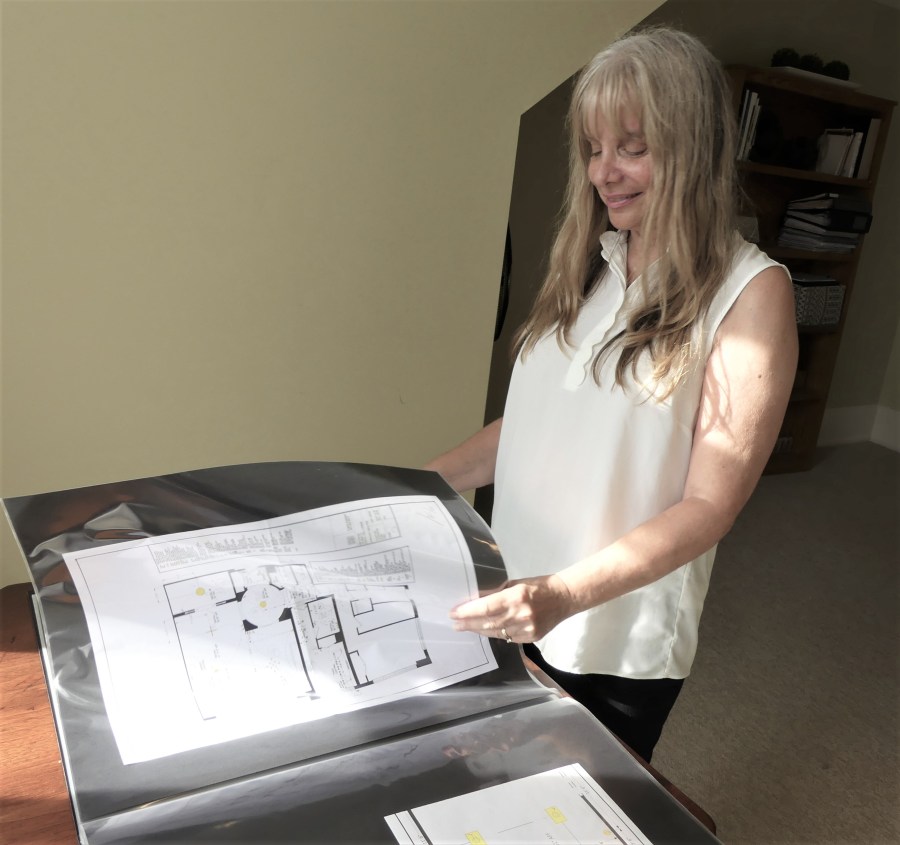
Furthermore, just like interior designers, decorators are also trained to create functional, efficient, and visually appealing spaces that reflect your needs, preferences, and budget. Both professions are taught how to produce design drawings and plans to support our concepts. Drawings that allow you to see if Lynteriors, for example, has captured your dream space or not.
Interestingly, not all designers are passionate about working with colour—my friend’s daughter, who studied interior design and works for a firm, found that aspect less enjoyable. She prefers creating drawings in order to design rooms. In contrast, many interior decorators thrive on the creative use of colour, texture, and furnishings to bring a space to life.
What Separates a Designer from a Decorator
As you can see in the graph below, both interior designers and interior decorators can assist with residential renovations—including creating design drawings, planning cosmetic updates, supporting wall removal projects, and designing kitchen extensions. The key difference lies in the focus of their training programs and areas of specialization.
Interior decorating programs concentrate specifically on residential spaces, particularly existing homes. In contrast, interior design programs cover a broader scope, including commercial spaces, new builds, and residential projects.
So, if your project involves redecorating or renovating a home that’s already lived in, hiring an interior designer may be more than you need. An interior decorator—who specializes in updating and improving existing residential spaces—can be a more targeted and cost-effective choice. However, if your project involves a commercial space or a new build, an interior designer is the better fit due to their advanced training in construction of new builds and building codes.
Graph: Difference Between Decorator and Designer
Well-Known Interior Decorator:
Shea McGee
I hold an interior decorating accreditation from Seneca College, but it’s worth noting that many successful design studio owners and design consultants do not have formal design degrees. For example, Shea McGee—now a household name in design—doesn’t hold a formal degree in interior design or even an interior decorating accreditation. Despite that, when she was starting out, she designed kitchens and bathrooms for homeowners.
Shea took some online design courses but never completed a formal interior design program. One of her earliest major projects was her mother’s home in Utah, which included a full kitchen renovation—something she tackled independently at the beginning of her career. While she didn’t hold the official title of “interior designer” at the time, she was already creating beautiful, functional spaces without formal credentials.
That said, residential homes—including their kitchens—are being successfully renovated by both accredited decorators and those without formal training. However, hiring an interior decorator with formal education means you’re working with someone who understands core design principles, space planning, and technical skills like drawing and drafting—tools that bring structure and clarity to your project.
If your space is a new build or a commercial property, that’s a different matter entirely. Those projects typically require the involvement of a licensed interior designer who is trained in building codes,and fire regulations which are required for these projects.
You can watch a YouTube video showcasing Shea’s kitchen project outlined above as well as projects by clicking the button below:
An Interior Decorator that Pioneered Decorating/ Design Industry
Elsie De Wolfe and the History
Very few people realize that interior decorating—and the role of the interior decorator—actually came before the profession of interior design. Interior decorating as a profession is just over 100 years old. In that time, what began as an artistic pursuit rooted in aesthetics, form, and function has evolved into a respected discipline.
Elsie de Wolfe is often credited as the first interior decorator to receive a professional commission. She began her career in 1905 and is widely recognized as the “grand dame of modern decorating.” Many consider her the originator of the interior design profession, often referring to her as the “first modern professional decorator.”
At that time, the title of “interior designer” didn’t exist—and there were no formal education programs for residential decorators like Elsie. Despite this, she left a lasting impact on the field and proved that decorators could successfully lead residential renovation projects, including kitchens and bathrooms, based on their talent, vision, and experience.
Today, interior decorators of residential spaces are supported by formal education in design principles, space planning, colour theory, drafting and other decorating techniques. This training equips us to manage a wide range of your home renovation and redecorating projects with confidence and creativity.
The quoted text above is sourced from the following blog. If you’d like to learn more about Elsie de Wolfe and her legacy, click on the button below:
In Ontario, interior decorators— or interior design consultants—are specifically trained to renovate and decorate existing homes. While interior designers are ideal for commercial projects or new builds due to their extensive training in building codes, they can be overqualified (and more expensive) for residential renovations though.
If you’re updating an existing space, a skilled interior decorator can deliver results that are just as beautiful and functional—often at a more affordable rate. Professionals like Shea McGee and Elsie de Wolfe prove that decorators can achieve stunning renovation transformations without formal design degrees.
Whether it’s a one-room refresh or a full kitchen renovation, interior decorators offer a refined eye, cost-effective solutions, and the design expertise to help you avoid costly mistakes. Plus, I wanted to add that decorating with furnishings is the finishing touch that adds warmth, personality, and that wow factor to your home—which is why we always plan for it from the very beginning.
As a certified interior decorator, I bring years of education and experience to blend creativity with practical know-how to turn your home into a space you’ll love every day. Whether you’re renovating your kitchen, bath or revamping a single room with new furnishings, paint colour and flooring, Lynteriors brings your vision to life—together. Click the button to contact us today!
My name is Lynn Asbury, an expert interior design consultant, homestager and owner of Lynteriors. I have over 8 years experience renovating, redecorating and stage homes that make homeowners and home buyers say “Wow” every time they walk into each room.
Affordable Countertop Ideas to Elevate Your Kitchen in 2025
Whether you’re planning a full kitchen renovation or just a simple refresh, selecting the right countertop material is a key decision. In today’s world—where budget-friendly options are more important than ever—it’s possible to achieve both style and function without overspending.
Countertops are more than just practical surfaces. They’re a major design focal point that can dramatically change the look and feel of your kitchen or bathroom. As one of the first elements people notice in a kitchen, countertops set the tone for your space and serve as the primary workspace, making them crucial for both aesthetics and functionality.
As we move through 2025, the demand for durable, sustainable, and visually appealing countertops continues to grow. The good news? You don’t need a luxury budget to transform your kitchen. With affordable options, you can enhance your home’s style and usability without compromising quality.
If you’re considering a renovation, your budget will play a big role in choosing the right material. Fortunately, there are plenty of cost-effective countertop options that offer both beauty and performance—without breaking the bank.
In this blog post, we’re highlighting 2 cost-effective countertop ideas that can give your kitchen a fresh, modern update without the high price tag.
➡️ Ready to be inspired? Let’s dive in!
The Role of Kitchen Countertops
A kitchen countertop is more than just a surface—it’s a core element of your kitchen’s design and functionality. Typically made from materials like stone, wood, or quartz (engineered stone), countertops are installed on top of base cabinets and provide a firm, flat workspace for food prep, clean-up, and everyday kitchen tasks.
This year, two standout materials are gaining popularity: one is an eco-friendly choice that supports a greener future, while the other is a high-tech option that elevates performance and functionality. Both offer unique benefits that can transform your kitchen into a space that’s as practical as it is stylish.
In this post, we’ll explore these two popular countertop options: wood and quartz. Each offers its own unique blend of style, durability, and charm—helping you create a kitchen that’s both beautiful and practical.
#1: Wood Countertops:
While cool grays and crisp whites have dominated kitchen design in recent years, warm wood tones are making a strong comeback. As more homeowners seek to reconnect with nature, the demand for sustainable and organic materials has brought wood back into the spotlight.
Walnut, cherry, maple, and mahogany countertops add a natural richness and warmth, creating kitchens that feel welcoming and grounded. In 2025, wood countertops are poised to be a top choice once again, offering a timeless aesthetic that blends organic charm with modern design sensibilities.
Thanks to advancements in sealing and finishing techniques, wood countertops today are more durable and water-resistant, making them a practical option as well as a beautiful one. For those who want to combine functionality with a cozy, natural look, wood remains a standout option.
Wood countertops offer a unique blend of warmth and texture that complements both modern and rustic kitchen styles. Their natural grain and organic appeal provide a beautiful contrast to sleek, contemporary finishes, adding character to the space.
One of the greatest advantages of wood countertops is their versatility. Whether your kitchen leans toward contemporary, minimalist, modern farmhouse, rustic, cottage, transitional, traditional, or country design, wood fits right in—enhancing the aesthetic without overpowering it.
Maple Countertop
The best wood for countertops ultimately depends on your personal style, functional needs, and budget. While several hardwoods perform well in the kitchen, maple is one of the most popular choices—and for good reason.
Maple is a light-coloured hardwood prized for its smooth, consistent grain and impressive durability. It holds up well to daily use, making it ideal for high-traffic kitchens. Its neutral tone complements a wide range of design styles—from traditional to modern—and can add a soft warmth to any space.
In white kitchens, maple and other light-toned woods help break up the uniformity, infusing the room with natural warmth and a soft glow. Light woods like maple or ash bring a clean, airy aesthetic while maintaining a cozy, welcoming feel. Whether you’re going for a sleek modern look or something more rustic and inviting, maple offers a timeless appeal that works beautifully across design styles.
Are Wood Countertops Less Expensive?
Wood countertops are generally more budget-friendly than natural stone or engineered materials like quartz. On average, wood countertop installation costs range from $50 to $150 per square foot, making them a cost-effective option for homeowners seeking style without the high price tag. While materials like granite and quartz offer superior stain and heat resistance, wood provides warmth, character, and savings—especially for DIY enthusiasts. If you want an affordable option that exudes warmth and want to install it yourself than a wood countertop may be the perfect option for you.
For example, our own wood countertop project cost around $1,400, but we significantly reduced costs by handling the finishing ourselves—applying a sealant and adding chamfered edges. While DIY projects may require more time and effort, they offer exceptional value. One of the biggest advantages of wood countertops is their DIY-friendliness—you can install them yourself, just like we did, making them even more affordable than quartz or granite.
In contrast, quartz, marble and granite are difficult to install without professional help, as they are heavy and can crack easily if not handled properly. Choosing wood not only saves money and is easier to install, but also gives you more flexibility and creative control. For example, wood has many stain options and wood grain options giving you a lot of stylish creative flexibility. And if you choose maple—a locally sourced, budget-friendly hardwood—you’ll enjoy even greater savings without sacrificing durability or style.
Plus, Canadian maple is an affordable choice because it’s locally grown right here in Canada. By choosing Canadian maple, you’re not only getting a beautiful, budget-friendly material—you’re also supporting Canadian businesses and helping to strengthen our economy. When you invest in homegrown products, we all benefit. That’s why I make it a priority to source as many materials and furnishings as possible from Canadian suppliers for you as my client.
#2: Quartz
Why Quartz Might Be the Perfect Upgrade for Your Kitchen
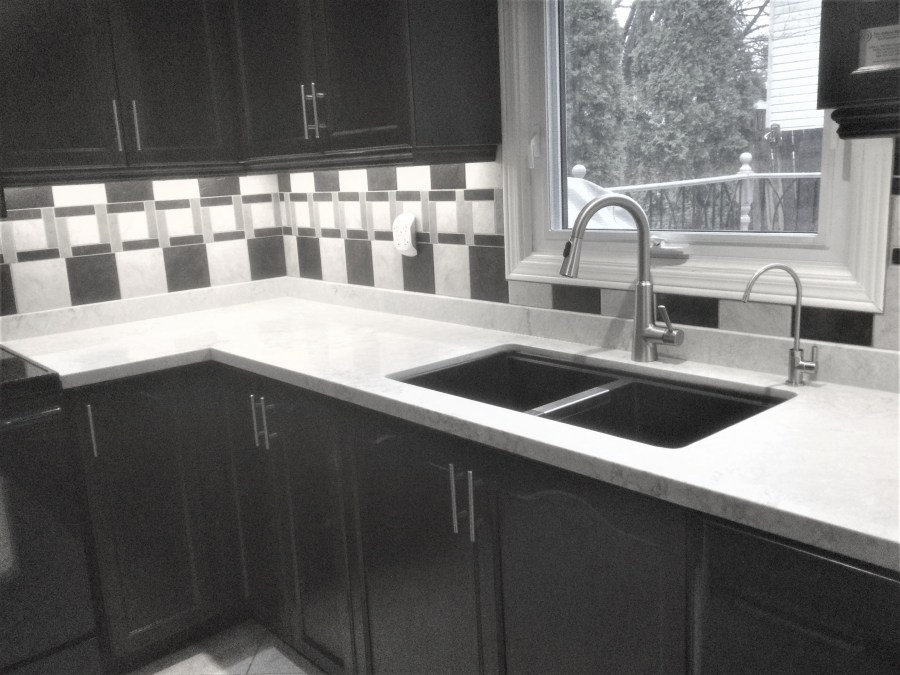
If you’re considering a countertop upgrade, quartz might be just the solution—just ask one of my recent clients. She initially planned to replace her worn laminate countertops with another laminate in a brown finish. However, after we reviewed the pros and cons, I recommended quartz as a smarter alternative.
Since she was thinking about putting her home on the market soon, I explained that quartz offers a stronger return on investment compared to laminate. She also wanted a surface that would clean easily and wouldn’t develop the foggy appearance that granite sometimes shows. Quartz checked all the boxes—low maintenance, and resale value.
In the end, she chose quartz and was absolutely thrilled with the results.
Here’s what she had to say in her Houzz review:
“Lynn Asbury most professionally gave us excellent advice regarding our kitchen renovation. It was a difficult assignment as we requested guidance in selecting a countertop, sink, etc., that would work well with the existing backsplash and ceramic floor tiles. She quickly guided us toward quartz and even returned with samples to choose from. Her artistic eye for color and materials, as well as her knowledge of available products, is outstanding. We highly recommend her to design and plan your next renovation.”
Click the button below to find the full review and check out my Houzz profile.
If you’re planning a kitchen remodel or just exploring countertop options, quartz countertops remain one of the best choices in 2025—for both style and performance. Quartz offers the luxurious look of natural stone with significantly greater durability. These engineered surfaces are scratch-resistant, stain-resistant, and moisture-resistant, making them a practical solution for high-traffic kitchens.
Often chosen as a more durable alternative to marble, quartz surfaces offer a wide range of colours and veining patterns that mimic the elegance of stone while being easier to care for. Because quartz is non-porous, it naturally resists bacteria growth—making it a hygienic and low-maintenance choice for busy families.
Low Maintenance, High Performance
Unlike wood or marble, quartz countertops do not require regular sealing. This not only saves time but also reduces long-term maintenance costs. The low upkeep and longevity of quartz make it an ideal option for homeowners who want lasting beauty without the hassle.
Cost and Installation Considerations
While quartz countertops are generally more affordable than marble, they do come at a higher cost than wood or laminate surfaces. One key consideration is that quartz is a heavy material and requires professional installation to prevent cracking or improper fitting. In contrast, wood countertops are lighter and can often be installed as a DIY project, which can reduce upfront labor costs.
However, when it comes to long-term value, quartz stands out. Its exceptional durability, low maintenance, and modern aesthetic contribute to a higher return on investment, especially if you plan to sell your home. These qualities make quartz one of the most sought-after kitchen countertop materials on the market today.
Affordable Kitchen Renovation Options
If your renovation plans involve updating materials while keeping the original kitchen layout and plumbing in place, you’re looking at one of the most cost-effective remodeling options. Cosmetic renovations—such as replacing your kitchen countertops—can dramatically transform your space without the expense of a full renovation.
Among the most affordable countertop materials, wood and quartz stand out for their blend of style, function, and value. Whether you’re going for a warm, rustic feel or a sleek, modern look, these materials offer excellent choices for a range of styles and affordability.
If you need help selecting countertops, cabinets, flooring, or backsplash that align with your preferred colour scheme and design style, I’m here to guide you through every step. And if your vision involves a more extensive renovation—such as reconfiguring your layout or removing walls to open up your kitchen into another room—we can help with that too. From minor updates to major transformations, we offer solutions tailored to your goals and space.
I, Lynn Asbury, am the founder of Lynteriors which provides interior design and decorating services in Aurora, Ontario, and the surrounding area.














 Lynteriors