
Interior Design Styles Trending in 2023: Part 3
Autumn is the traditional time to begin redecorating projects. So, you may be thinking about doing just that. Times are uncertain, though. So, you may want to incorporate some of your existing furniture to keep the costs down.
Perhaps you may want to modernize your space, but some of your pieces may be traditional. Or you may have traditional-style furniture that has sentimental value. So, you want to incorporate it into your updated room design. If so, a transitional style may be for you. The great thing is this style is trending now and will probably become a trend in 2023. So, this style may appeal to you for this reason too.
The wonderful thing about this style is it allows you to keep your existing traditional style furniture but augment it with more contemporary furnishings. And if you like modern and classic furniture, then the transitional style may be worthwhile to explore.
If you’re looking to upgrade your living space, there are many ways to design a transitional-style home. This post shows one of these ways to do it. It features a transitional-style living room redecorated by Lynteriors. The Aurora, Ontario, homeowner wanted to retain most of her furniture.
The transitional style blends traditional and modern design. It combines classic and minimalist furniture, drapery, lighting and accessories in your space to create a timeless look. The transitional interior design style is a type of contemporary decor that combines straight lines with curves, masculine and feminine features, and an old-world classic look with chrome and glass to create a stylish and comfortable space. It is a great style to consider if you have both women and men living in the home. Transitional decor pulls from the best of both aesthetics to form a cohesive concept that is equal parts old and new.
These design styles don’t share many characteristics, so they might not seem compatible and cohesive. However, the transitional design unites these two disparate forms in innovative ways. To inspire you and give you ideas, I’ve compiled a guide to creating the transitional style to help you understand this versatile interior design. Whether you want to change the furniture, colour scheme, decorative pieces, or lighting fixtures in your room, I’ll show you how to combine traditional, modern and contemporary designs for a refined yet casual and comfortable interior.
What is Traditional Style Furniture?
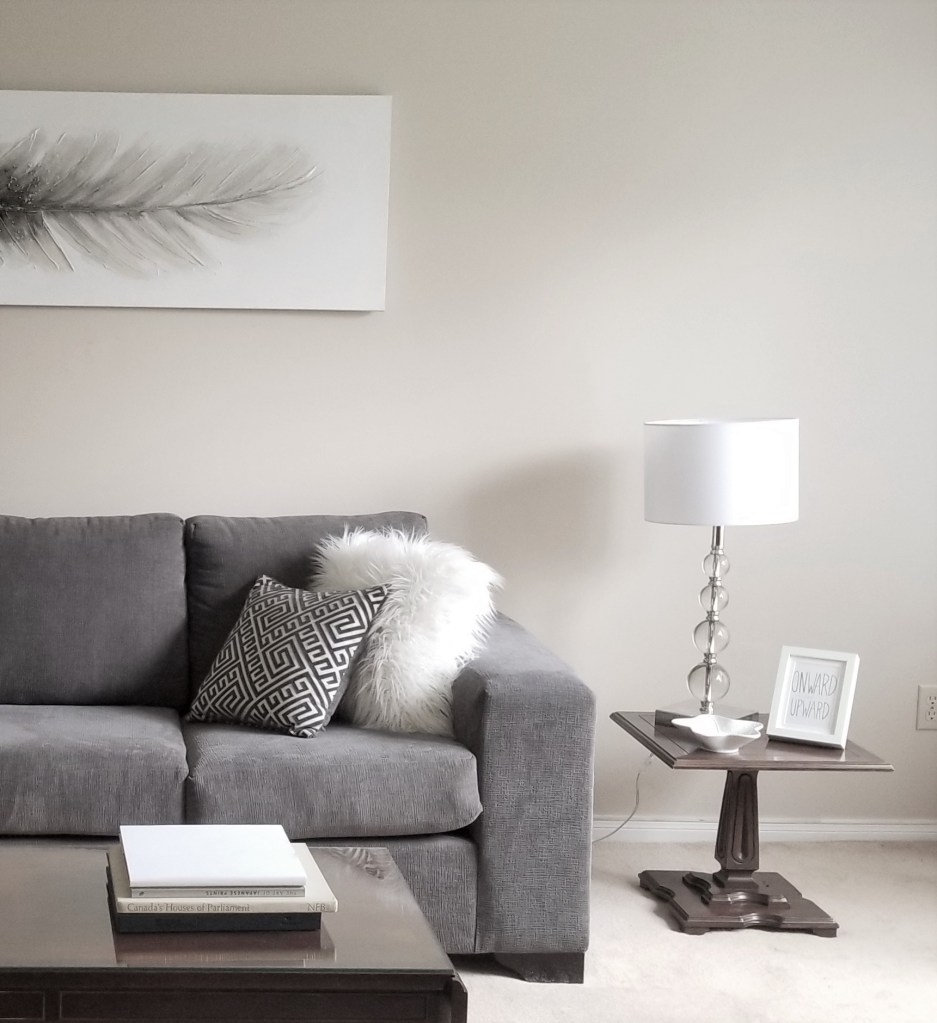
Since the transitional style includes classic characteristics, I will discuss the traditional interior design style. The classic design style draws inspiration from furniture and decorative items that were popular in the 18th and 19th centuries. The furniture was made from natural materials such as wood. This living room has traditional-style wooden tables. For example, the side tables and coffee table in the living room pictured below are wooden.
Furthermore, classic-style furniture often featured intricate details and carved motifs. Some examples of traditional furniture include furniture with fluting on table legs. Fluting is carvings that involve carved thin vertical grooves close together. An example of fluting is seen on the table on the right side of the sofa below.
Also, the coffee table has two framed rectangular panel embellishments on its side, giving it a classic vibe. The overall effect is richness because of the wood detailing and warmth because of the wood furniture. There are also more curved lines making up the classical furniture. For example, the spider leg-style legs on one of the nesting tables to the left of the sofa have curvaceous legs. It gives the table a feminine feel. While traditional furniture can be ornate and curvy, modern furniture is all about clean, straight lines.

What is Modern Style Furniture?
The transitional style also includes elements of modern design. Modern design is a style of interior design that emerged in the early twentieth century and continues to evolve. It was a response to the ornate furnishings of the Victorian era. As a result, the movements and styles of the 20th century have a no-frills sensibility. Go to https://lynteriors.wordpress.com/2022/09/15/interior-design-styles-trending-in-2022-part-1/ to find out more about the modern style.
Many modern furniture designs have straight lines and simple forms. For example, the sofa above has straight lines making its shape rectangular. Even the arms have straight lines. This living room has a balance of modern and traditional style furniture. The form or shape of the sofa is a simple rectangle. This simple geometric form making up the sofa gives it a masculine feel.
It is juxtaposed with the traditional tables around it. The end tables have curves in their structure, giving them a feminine feel. So, the transitional style fuses masculine and feminine qualities. As a result, this style is perfect if you are married and have a family. Everyone in the family will feel comfortable in this room.
So, as you can see, there is a combination of modern and traditional furniture in this room above. This furniture melding gives it that warm but sophisticated transitional vibe.
Other Characteristics of the Style:
Neutral Colour Scheme
Typically, a neutral colour scheme is a foundation for the transitional style. It includes colours such as white, gray, beige, taupe and tan. Dark colours such as brown and black help add depth and subtle contrast to transitional spaces.
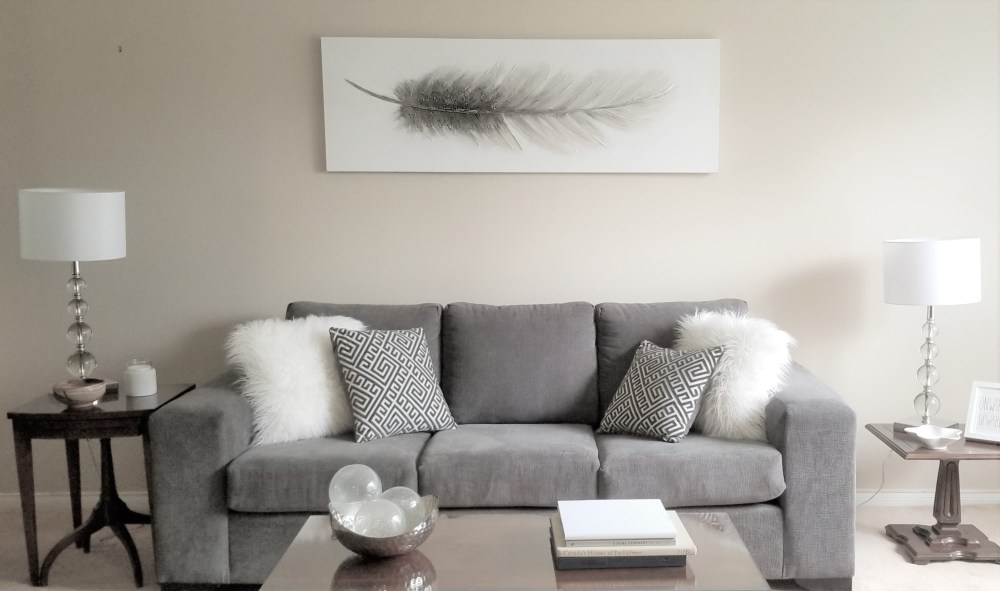
This living room has a neutral colour palette. There are grays on the sofa, throw pillows and wall art. And there is white on the lamp shades, wall art, candle, plate, accent pillows, coffee table book, orbs and picture frame. The gray and whites add a modern touch to the room.
The beige walls, coffee table book and bowl on the side table add the earthy classic colour and feel to the room. Even the colour palette helps to create the transitional vibe with a balance of modern white and classic earthy tones of brown and beige. You can incorporate whites, grays and earth tones in your room too.
Artwork
In transitional spaces, such as in this living room, the artwork is usually more modern to create contrast with the traditional furniture. So, incorporate minimalist art into your room to balance your traditional furniture.
Lighting with Metallic and Glass Accents
Moving on to lighting, the transitional style relies on modern table lamps like the ones in this living room. Chrome and glass lamps or light fixtures scream modern. They add glamour to the space too. And when you place them on traditional furniture pieces such as side tables, they help create that transitional vibe.
Neutral Coloured Drapery
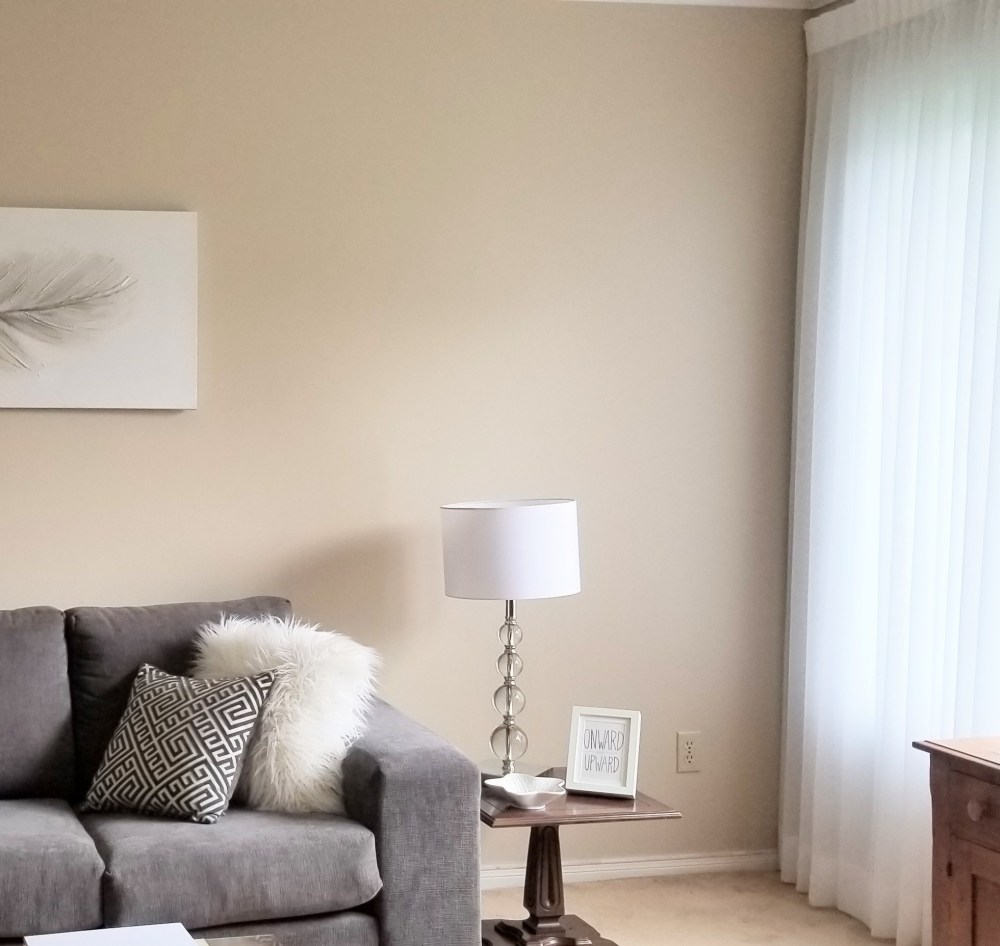
For the drapery, neutral-coloured fabrics are best for a transitional look, such as warm white. You can add warm white sheer curtains as we did in the living room pictured above. The white sheers designed by us replaced the old ones. It supports the neutral colour scheme of the room too.
Is the Transitional Style the One for You?
Transitional style thoughtfully mixes two design styles to create contemporary spaces with timeless design. For example, the transitional living room featured in this post melded traditional-style wooden tables with ornate detailing and curves with a minimalist straight-lined sofa. So, one way you can achieve this style is by including traditional and modern furniture in your space.
Other transitional style characteristics to incorporate into your transitional space include choosing a neutral colour scheme and adding modern art and contemporary lighting with metallic accents. They help create that transitional vibe too. So, if you love traditional and modern furniture and decor, this decorating style might be for you. You may be feeling you may need some help creating this look. If you want to find out how I can help you, click the link below to discover the services I offer. Click on: https://lynteriors.wordpress.com/work-with-me/
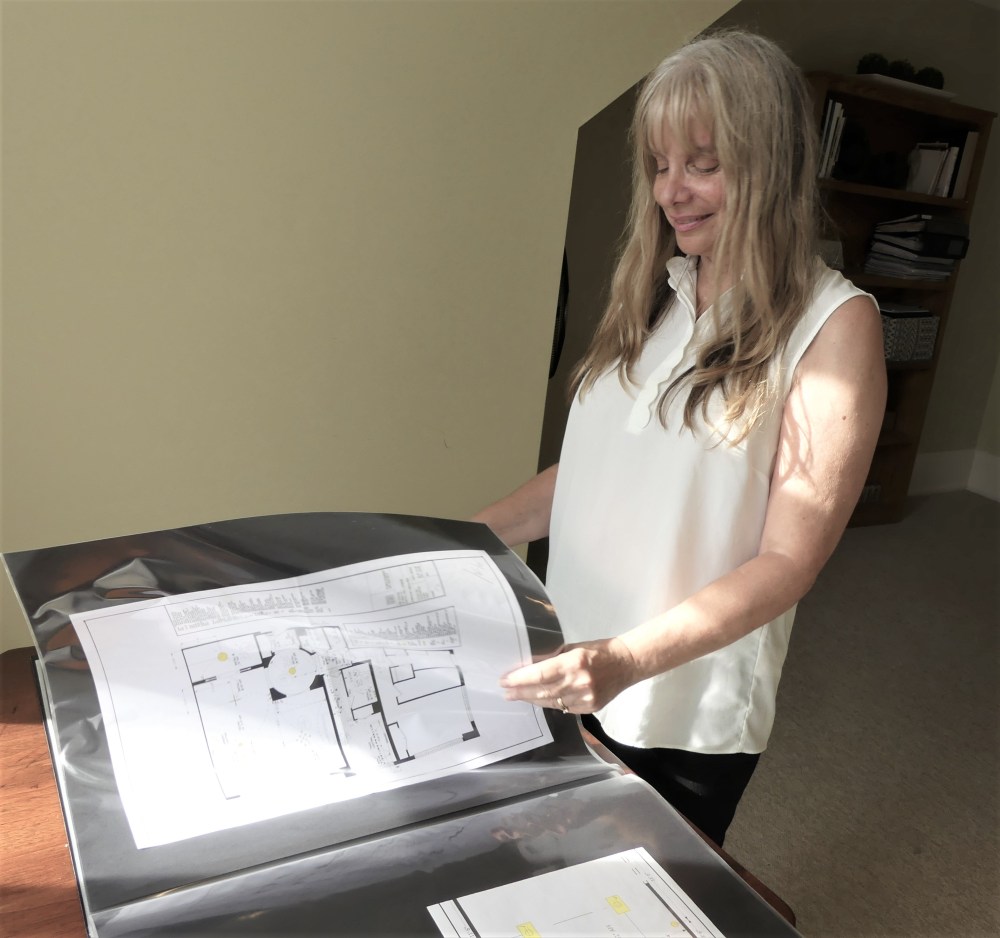
I, Lynn Asbury, am the owner of Lynteriors, an interior design firm based in Aurora, Ontario.

 Lynteriors
One thought on “What is the Transitional Decorating Style?”