
Fall is here, so now is a great time to plan for your autumn interior design projects. You may be thinking about giving your space a facelift. Or perhaps you may want to do a renovation. Whether you intend to decorate your home on your own or want to get a designer to help you, one of the steps in the design process is determining your ideal interior design style.
But you may not know how to figure out what style to choose for your space. You are not alone. So many homeowners I have talked to cannot understand the difference between the styles. There are many interior design styles and plenty of sub-categories within those styles, so it is hard to narrow down one that is your preferred style and that suits your space.
It is hard to figure out your favourite interior design style if you do not know their differences. So I will break down 1 of these decorating styles and explain its different characteristics. When redecorating or renovating, understanding what sets one decorating style apart from the others is paramount. As I talk about these styles, I hope it will help you find your favourite style. And the one you would like to incorporate into your home.
If you decide to work with a designer, having a basic understanding of the interior design vocabulary so you can describe and define your ideas and visions for your desired interior design look is necessary. Knowing your unique style means you can explain it. If you know your preferred style and can communicate that to your decorator, she can help you create your dream room or space. So with this in mind, I thought I would discuss one trending interior design style. Modern style is the style I will discuss in this post.
Modern Interior Design Style
History of Modern Interior Design
Each style is a result of different influences and originated during different periods. So one way to find your personal interior design style is to study furniture from different eras, historical periods or movements. For example, modern design is a style of interior design that emerged in the early twentieth century and continues to evolve. It was a response to the ornate furnishings of the Victorian era. As a result, the movements and styles of the 20th century have a no-frills sensibility.
The furniture in your space can affect the overall aesthetics of your home. If you want it to have a modern style, modern furniture design will help you achieve that.

Desire for Simplicity
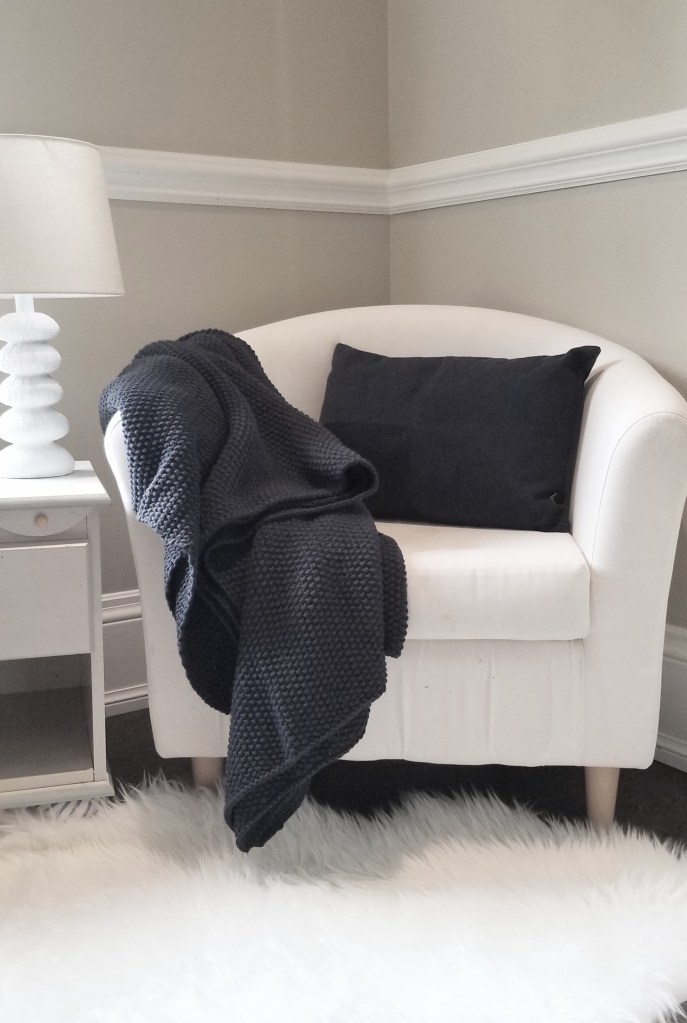
Modern style was born from a desire for simplicity. It was a new stylistic ideal that removed all ornament from the furniture. For every ornate piece of furniture or ornate fixture and rich patterned fabric, modernity presented a streamlined alternative—a pared-down approach to furniture and decor. The shift away from ornamentation changed the overall aesthetics. For example, nail heads and ornate floral patterns were removed from tub chairs like the one above. So the designer could design a more streamlined version like the modern tub chair below.
If you dislike embellishments on your furniture, modern style may be for you. By the way, tub chairs are dining or lounge chairs with rounded arms and backs. They resemble a tub in shape, hence the name.
Purpose or Function of Furniture
It was a tremendous change from traditional furniture styles, which were loud and showy. Modern furniture designs, however, focus on the purpose of the furniture other than ornate designs that will make the house busy and visually heavy. They were now designed based on their function.
For example, the chair above is based on a traditional tub chair, but with all the embellishments removed. In this case, it was about the comfortable chair, not its ornate details. It still has a graceful curved back and arms. But the swooped arms have a more subtle angle. Also, the chair becomes even more comfortable to lounge in without embellishments. Without the nail heads and wood frame, it is also easier and cheaper to make in a factory.
Hand-Made Methods Replaced by Industrial Production Methods
As alluded to above, furniture was beginning to be mass-produced in factories at the end of the 19th century. The furniture designers focused on affordable, simple products that would be easier to mass-produce. As a result, the hand-made manufacturing methods of the earlier era were overtaken by industrial production methods, which integrated modern materials into the designs.
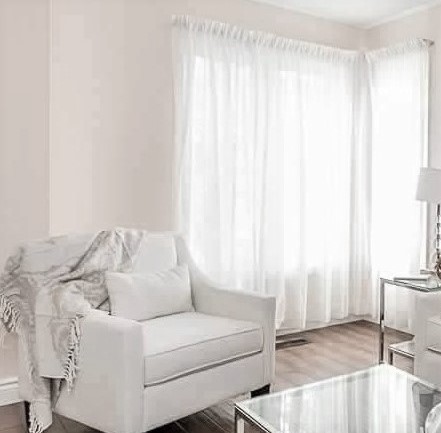
For example, these factories used new materials to make furniture, such as plastic and steel, instead of wood. Before this period, tables were made of wood. Below is a photo of an Aurora, Ontario, living room. The modern style coffee table and side table have straight lines. Glass and chrome were the material used to manufacture them. As a result, they are simple to mass produced in a factory.
Characteristics of Modern Furniture
Each style, including the modern style, comprises distinctive furniture, lighting and accents that give it its signature look. As discussed earlier, this style is a mix of all the substyles of the twentieth and twenty-first centuries. The modern style includes the substyles of Bauhaus, art deco, the mid-century modern style etc. Despite all these substyles, the super category style has general defining characteristics.
Basic Forms and Shapes
One of the characteristics of modern furniture is its simple forms and shapes. The designs have simple geometric shapes and angles. If there are curves, they are simple and streamlined. Chairs are a great example. They typify the forms seen in this style.
The shapes are often square-shaped chairs or rounded-shaped chairs such as tub chairs. The boxy-shaped club chair in the above photo is similar to Borge Mogenson’s 1963 pared-down version of the traditional club chair.
The top of the back of the traditional club chair had a wooden crest and an exposed wooden frame. It was invented 250 years ago in France. Borge took the club chair to its bare bones and created a simple square design with swooped arms. He removed the ornate wooden top, and the wooden chair frame was not exposed anymore.
The chair above has the same form and is a recent copy of Borge’s 1963 chair. It has soft cushioning just like Borge’s chair. So it is still a comfortable chair which was its intended function.
Straight Lines and Clean Lines
Many modern furniture designs have straight lines. For example, the club chair above has straight lines making its shape boxy. Even the ends of the arms have straight lines. It also has subtle swooping arms that create a streamlined, elegant look. He used straight lines and streamlines because Borge believed in the simplicity of lines. The coffee table and side tables have straight-lined silhouettes too.
Furthermore, modern furniture has clean lines. It means all the ornamentation and embellishments are removed. For example, the chair above has a square-shaped tapered leg that is clean-lined with no ornately carved detailing. And the tub chair below has tapered legs with no added detailing.
Patterns Removed
Modern style furniture has no ornate, heavy floral patterns like traditional upholstery often had. The tub chair pictured above and the club chair below have no designs on their fabric. They have solid white coloured textiles instead.
Neutral Colour Schemes
Modern style steers clear of dark or bright colours found in traditional interior design styles. Instead, it favours a neutral colour palette. A neutral colour scheme includes white, grey, black, brown, and beige.
Borge Mogenson’s 1960s club chairs had pea-green fabric or brown leather. The updated modern style club chair below has a white polyester linen-look fabric. It does not have the dark or bright classic colours or the pea-green colour found on 1960s upholstered furniture.
Some modern-style homes have a pop of colour: such as the navy blue and white reading nook tub chair above.
Sleek surfaces
Shiny, smooth and glossy surfaces are the hallmark of modern furniture designs. Removing carvings and other embellishments from the furniture surface creates this smooth surface and that sleek look. Tables made of polished chrome and glass create that shiny look too. The coffee table and side table in the living room below are examples. If you like this type of furniture, the modern style may be for you.
But you may prefer furniture and a style with some embellishments, glam and a modern touch. If so, you may like the modern glam farmhouse style. To find out if you like the modern glam farmhouse style go to https://lynteriors.wordpress.com/2022/09/29/what-is-modern-glam-farmhouse-style/
I, Lynn Asbury, am the owner of Lynteriors, an interior design firm based in Aurora, Ontario.

 Lynteriors
2 thoughts on “Interior Design Styles Trending in 2023: Part 1-Modern Style”