
Many of you may have a sofa or chair that squeaks, sags or wobbles and needs replacement. And if you have not bought one yet, read on to find out how to avoid these problems. The materials and methods used to construct your sofa and chairs will ultimately determine how comfortable and long-lasting your furniture will be. The frame’s material, construction, and suspension are the three factors affecting whether your upholstered furniture will sag or not. So the key is to start with a solid foundation: Strong frames and springs.
The frame supports the entire construction—plus the weight of all the people who sit on it for years. There’s nothing more frustrating than spending good money on a sofa that will not last, no matter how gorgeous it is.
Most elements of sofa construction are not visible to you, but they can make the difference between one that will last a few years and one you can hand down with pride. Furthermore, a high-quality frame keeps it out of landfill.
Since I am aware of this as an interior designer, I am careful to check how the manufacturers build the frame and suspension. Rest assured, Lynteriors has high standards regarding frames and springs found in your upholstered furniture procured by me.
What to Look for in a Quality Upholstery frame
- hardwood or engineered hardwood with at least 7 layers of solid hardwood
- double dowel joints
- corner blocks
- joints reinforced with glue or screws or staples
RULE 1: A SOFA IS ONLY AS GOOD AS ITS FRAME.
Frame Material:
For a sofa to last for more than a couple of years, it must be built on a sturdy frame. Pine typically has knots, so it is prone to crack or warp. Other softwoods can sag too. Hardwoods are stronger than softwoods, so these problems are less pronounced.
Furthermore, kiln-dried hardwood is the most reliable choice for durable sofa frames. Kiln-drying removes any water in the wood. Moisture in the wood can warp the wood over time. So kiln drying makes the hardwood frame even stronger. For example, Perri’s Fine Furniture uses kiln-dried maple hardwood to produce its frames. Perri offers a lifetime warranty on all frames. If a piece has a lifetime warranty it implies that the frame was put together well.
You want to make sure your frame isn’t going to warp or crack, so you should only consider buying sofas made with kiln-dried hardwood or engineered hardwood. That said, engineered hardwood is a broad category of materials, which means it’s harder to determine quality. You want to avoid any engineered woods that are listed as medium-density fiberboard (MDF), particle board, or inexpensive standard plywood. The best-engineered hardwood is made by pressing at least seven layers of solid hardwood wood together to create a material that is exceptionally strong.
For example, Van Gogh Furniture Designs has engineered hardwood frames with seven layers of solid hardwood that make up their frames. So sofas, loveseats and lounge chairs made by them will last a long time.
Any factory can assemble a frame made of particleboard and MDF with loads of glue. And when you try it out, that sofa might feel sturdy enough. But with use, sags and squeaks develop and in some cases, even the entire frame will develop a wobble. Big box stores like Ikea sell sofas made of laminated veneer lumber, plywood, particleboard, and fiberboard mixed in with solid wood. So their warranty is often only for 10 years. Unfortunately, these frames will lead to sagging over time. Buyers beware!
Rule 2: Frame Construction Needs to be Considered too
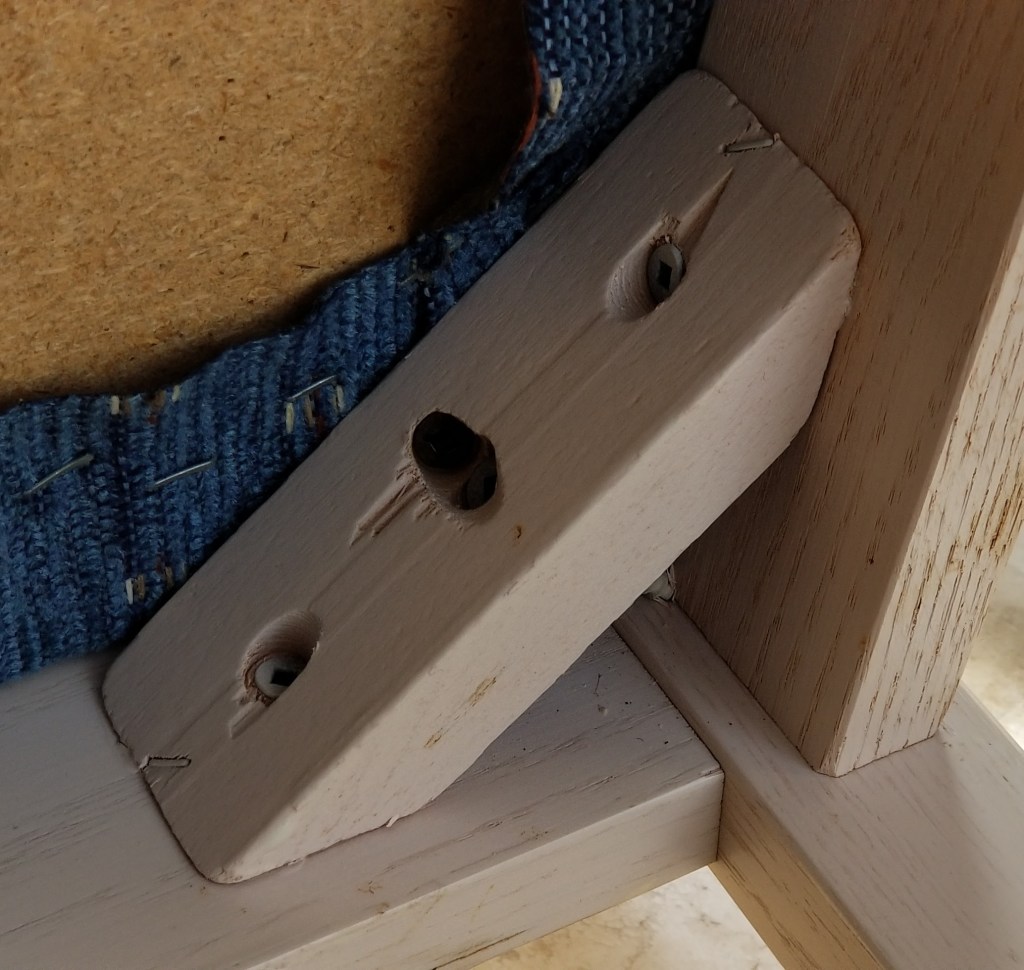
Furniture is made by joining pieces of wood together. So it’s the sturdiness of the joints that leads to upholstered furniture getting wobbly. And to it even breaking. Solid types of joints to look for are:
- Mortise and Tendon: This produces the strongest joint. And it is used when two pieces of wood meet at a 90-degree angle. One part of the joint has a hole, and the other is cut to fit into that hole.
- Double Dowel: A dowel is a small, wooden cylinder. It gets inserted into a small round hole drilled into two pieces of wood to hold them together. It is likely to loosen over time, though. Unless the joint is reinforced with corner blocks.
- Corner Block Reinforced: When there is a corner, an extra piece of wood is placed at an angle and screwed into place.
- Reinforced Joinery: The joint is then reinforced with glue, screws, or staples
Check that your upholstered furniture is connected by mortise-and-tenon or double dowels. If they’re only glued or stapled together, the sofa or chair will not last long. Also, the corners of chairs or sofas need enforcement with corner blocks. At Perris Fine Furniture, the corners are double-dowelled and reinforced with corner blocks which screw into place. So you know your sofa or chair will last a long time.

RULE 3: Good Quality Springs Prevent Saggy, Squeaky Sofas Too
The springs refer to the suspension, which is the part of the sofa under the cushions. The springs ensure you don’t end up sitting on the floor!
- Eight-Way Hand-Tied Web and Coil: It is the most costly option. But it is the mark of a high-quality piece of furniture. Numerous coil springs are supported by metal or fabric webbing. Also, the springs are secured to one another with twine. They are hand-tied in eight different spots per spring that link each spring to the next. This construction method keeps the springs from shifting. They also ensure the suspension won’t start to squeak over time and ensures longevity. At Perris, most pieces are available as web and coil.
- Drop-In and Pocket Coil Springs: Drop-in coils are coils mounted on a metal frame. They are a less labour-intensive and less costly version of a spring suspension. And they are added to the furniture as a single piece. This system isn’t supported on the bottom. So it will start to sag before other suspension types. There are a lot of metal-to-metal contacts, which can lead to squeaking. Some manufacturers will take these drop-in systems and add twine. They then call them eight-way hand-tied even though they aren’t the real thing. Pocket coils are similar to what you’d find inside a mattress. They are coils wrapped individually in fabric. It seems to be of higher quality than the drop-in coil option.
- Sinuous springs: It’s the most common suspension in low-to-mid-priced sofas. This suspension is made of zigzagging pieces of metal set in rows running perpendicular to the front of the chair or sofa. Some people say that eight-way hand-tied is the best. Other people say that sinuous springs can perform just as well at a lower cost. Sinuous-spring sofas are indeed less expensive than eight-way hand-tied. If properly made, they will perform better than a drop-in spring system. The steel wires need to be at least 8-gauge though. Perri Fine Furniture and Van Gogh Furniture manufacturers both offer these types of springs too.

There you go—this is how I curate a long-lasting sofa or chair here at Lynteriors. You don’t have to worry about these criteria because every sofa procured by Lynteriors is built on a solid foundation.
A sofa doesn’t just need to look pretty or feel comfortable. It has to be made well and has quality bones. This is the key to sofa longevity! If you have questions about upholstered furniture frames and suspensions, contact me at asburylynn@gmail.com.
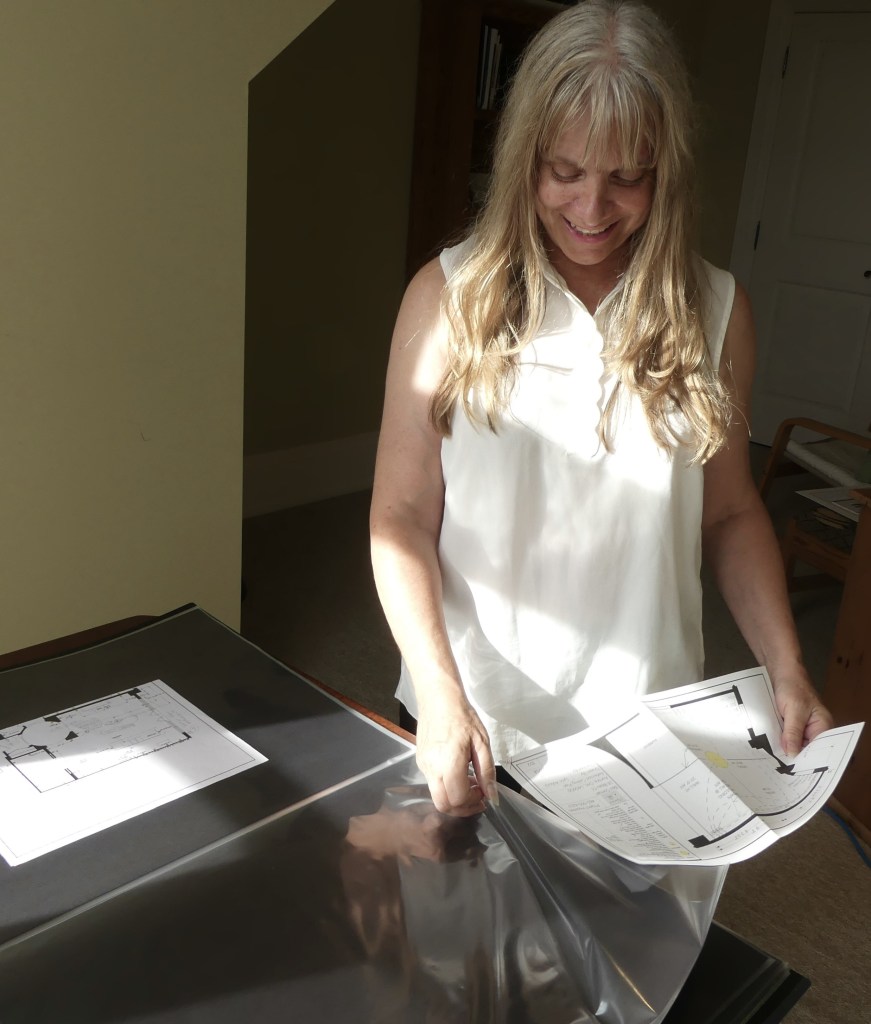
I, Lynn Asbury, am the owner of Lynteriors, an interior design firm based in Aurora, Ontario.

 Lynteriors
One thought on “Why Does Your Sofa’s, Construction Matter?”